
In the field of collective housing Le Corbusier’s Unité d’Habitation at Marseilles had something of the function of a prototype, writes William Curtis in his 1981 Modern Architecture since 2000. I met Curtis some time ago at an Italian architects’ conference in Sicily and have kept in touch since. Having recently seen my 17/08/25 post in Linkedin about Darbourne’s and Darke’s Lillington Garden in Pimlico, he referred me to his account of the housing estate in his book Modern Architecture together with a wealth of references he published discussing this project.
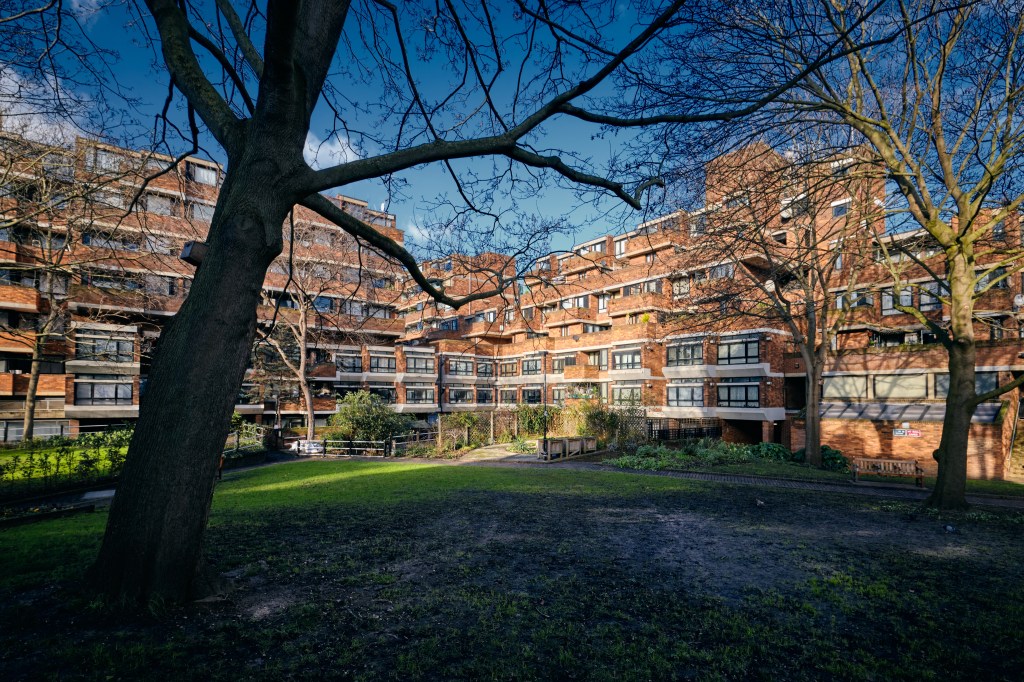
Lillington Gardens is the last project he analyses in chapter 24 – ‘The Unité d’Habitation at Marseilles as a Collective Housing Prototype’ – tracing the genealogy of housing projects over 25 years following the opening of The Unite in 1953. Built between 1967 and 1973, Lillington Gardens estate in Pimlico was ‘soft in its thinking … and has a picturesque form, wrapping around courtyards and precincts with sensitive level changes and vistas (recalling the townscape ideas of Gordon Gullen)’. Paying respect to its neighbours, particularly the pre-existing Gothic revival church by G. E Street, the new housing, was high density, used brick and concrete beams, adopted the street-deck principle, together with a hybrid of courtyard type, hill town and Unité, all adapted to the Pimlico context.
Celebrating Le Corbusier’s Mediterranean vision, the Unité ‘stands at the head of a sequence’ of housing schemes having provided lessons for other British architects over a quarter of a century. Alison and Peter Smithson’s Golden Lane estate, Denys Lasdun’s ‘cluster blocks’ in Bethnal Green, Neave Brown’s Fleet Road Terrace in London to name but a few. Like Lillington Gardens, they all bear the influence of the Swiss architect and his Utopian-socialist prototype for an industrial society of the second-machine age. Like Le Corbusier, who envisaged an ideal population of 1,800 inhabitants for a mini society of the industrial age, these architects saw the street-deck as an effort to reinterpret traditional working-class doorstep culture in an elevated form.
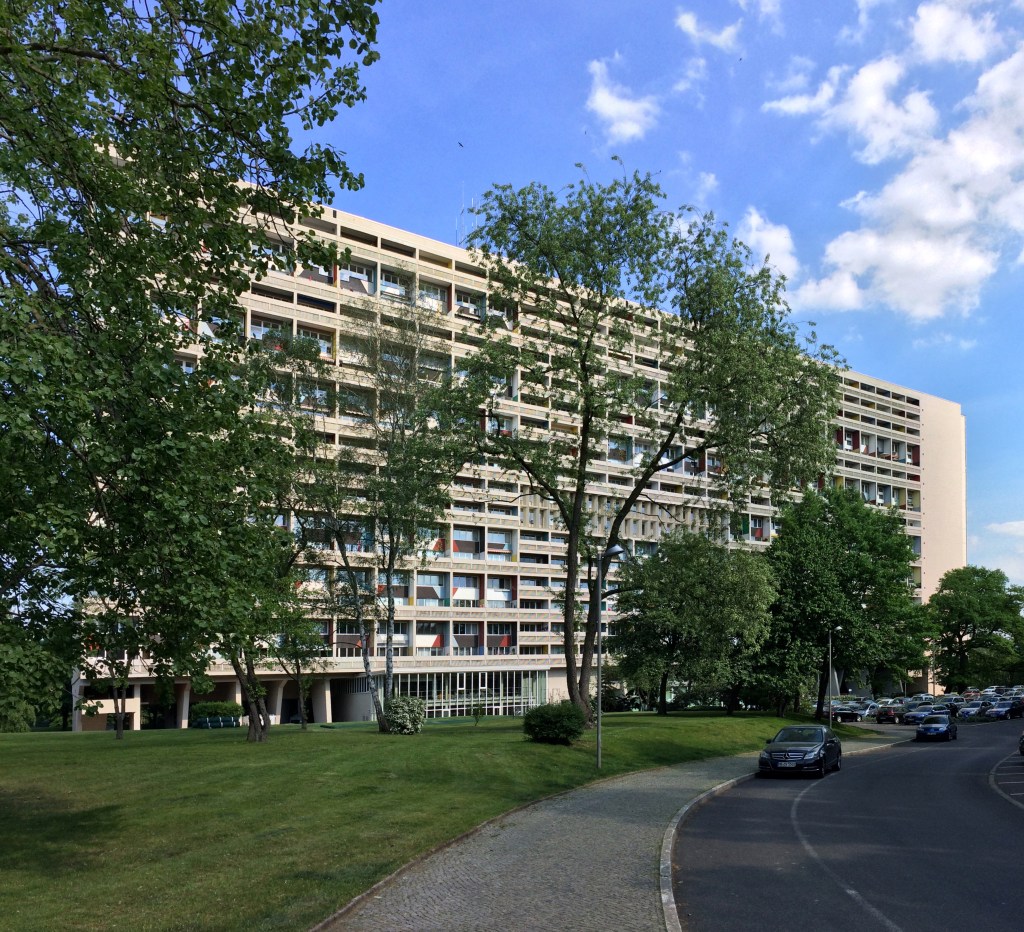
Large scale application of Modernism in Britain had to wait until the decade following WWII, where fertile ground was offered for architectural experimentation, facilitated by the devastation of the Blitz and supported by the rise of socialist housing policies. Britain still retained legacies of 19th century Victorian philanthropy, Ebenezer Howard’s Garden City Movement, as well as new measures in the Housing and Town Planning Act in 1919 and the 1930s Slum Clearance programme. These culminated in the building of large municipal estates, with architects and planners being called upon to rid many inner city ‘slums’.
Just a few streets away from Lillington Gardens, on Page Street, stands Edwin Lutyens’ Housing Scheme which I discussed in my previous blog. Commissioned for London County Council, it was completed in 1930 as part of the slum clearance programme in a derelict semi-industrial area, prone to flooding. In contrast, Pimlico is today largely residential, with a mix of 19th-century terraces, 20th-century estates, and modern developments.
The majority of post-war construction was heavily criticised for its monotonous blocks of flats, indulgent experimentation and high rise buildings that broke existing street patterns. Some areas such as Richmond, Pimlico, Finsbury, and Paddington were fortunate to see more convincing reinterpretations of the Unité d’Habitation model. Lillington Gardens in Pimlico embodies this spirit. Curtis saw ‘Lillington Street as a fully domesticated and thoroughly Anglicized version of the Unité: a fitting image for the well-meaning impulses and compromised Fabianism of the Welfare State’, a reference to the influence and tensions with the various strands of socialism within the Labour party.
What transpired in post-war Britain in large social housing provision tested the limits of some of the fundamental ideas in their application to the real experience of residents.
The Unité prototype was caught in a transition from the utopian hopes of modernism in the 50s to scepticism about environmental hyperdeterminism and social engineering in the subsequent years. The formal progenitors of some of these ideas like Casbahs, Italian hill towns, the principles of enclosure, repetition and hierarchy in the planning and design of UK’s housing estates became the targets of severe criticism by academics. The Bill Hillier, Julienne Hanson and their colleagues at the Bartlett, UCL conducted an extensive programme of research in the 80s and the 90s the findings of which led to criticism against the foundational principles of these large scale housing developments. The researchers asserted that communities were not forged by a correspondence between social groups and the courtyards they inhabited, but by far more complex and nuanced mechanisms. In their view, communities relied both on spatial proximity – living around the courtyard – and distance – travelling to meet one’s group of membership, affiliation or kinship.
They contended that the more mobile and privileged members of society are, the more they tend to build their networks across space; the least mobile and privileged, the more they are constrained in their surroundings. For Hillier, putting the most vulnerable people of society into spatial enclaves exacerbated their deprivation, segregating individuals from the amenities, chance encounters and urbanity of the larger context.
In addition to Lillington Gardens, Darbourne and Darke were also the architects of the Marquess Estate (1966-1976) in Islington, designed as a series of streets and alleys comprising mostly family houses with gardens arranged around green spaces. The scheme was highly commended for good design in housing by the former Department of the Environment, and was described as a ‘magnificent showpiece’ by the then prime minister, Harold Wilson, when he visited to open it. But, by the 1990s the estate gained a fearsome reputation as an area of high crime, with twice as much vandalism as anywhere else in the borough as well as a host of technical failings. Its intricate design was seen as a major cause and fear of crime on the estate. Research by Hillier found that the estate’s complex layout meant that very few people walked through it and therefore was less self-policing. In response, the estate underwent a major redevelopment led by Islington Architects, starting in the late 1990s and 2000s. How did that work out?
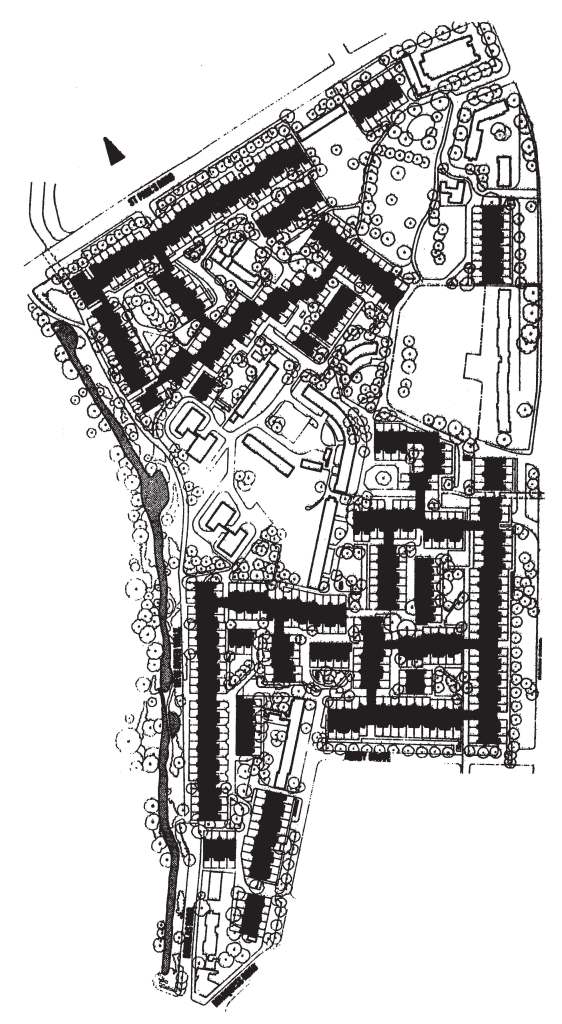
The academic critique of enclosure, repetition, hierarchy did not yield any practical solutions to the problems of social housing. Neither could they be expected to, given the limited scope of spatial layout and design in the face of major socio economic change. The socio-economic transformations of the post-industrial society in the Thatcher years brought about a fundamental social restructuring of society.
This was a restructuring that reframed housing as a private commodity rather than public good and stigmatised council estates as residual housing for the poor. Yet, Hillier’s critique contributed to rising awareness of those characteristics that isolated residents from each other and from the surrounding streets. The renovations of Marquess Estate involved selective demolition, new infrastructure, and the creation of public amenities—including a community centre, school, and green open spaces—while residents remained in place. It dismantled the very design features once celebrated, replacing decks and labyrinthine layouts with visible, street-like spaces. It was both a concession to the criticisms of modernist housing and a shift toward more conventional urban design.
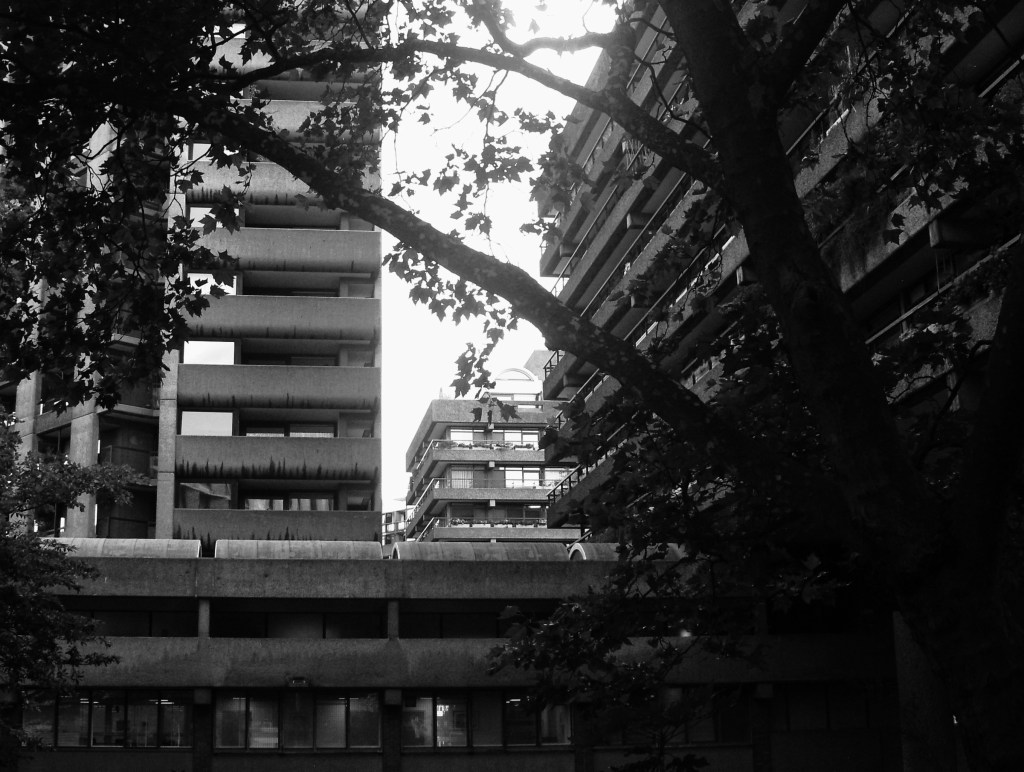
It is often argued that the failings of social housing developments has to do with how these developments are occupied and managed and not how they are planned and designed. Not all variations of the Unité as prototype were disastrous or raised similar criticisms. Displaying the same principles – a defensive outlook, high rise towers, a raw concrete surface, a dark and dangerous approach route through an underpass and an array of confusing paths internally – the Barbican housing and cultural complex in the City of London for example, is much celebrated and canonised as a successful desirable brutalist housing complex. It was always intended for affluent residents, and is inhabited by high profile politicians, architects and academics (including the late Bill Hillier). The contrast suggests that design alone does not determine success or failure; social composition, management, and perception are just as decisive.
In my third blog I will address what all of this means for designing large scale housing in the 21st century and where we might find inspirational approaches and successfully executed projects enabling that much vaunted ‘community’ to form.

