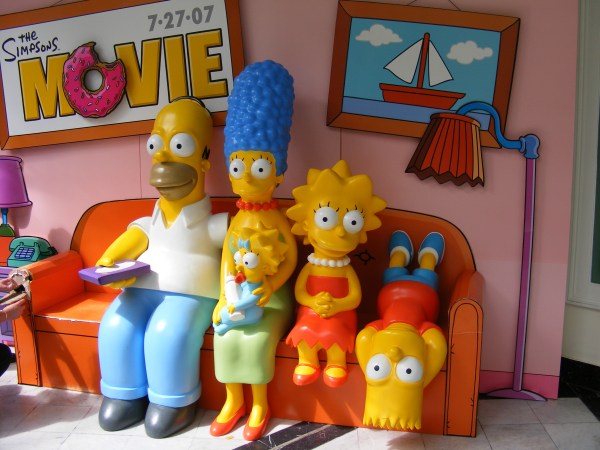
Can narrative expressions in mass media help us understand contemporary social behaviour in domestic spaces? Gustavo Maldonado, a student in my Architectural Phenomena module at the Bartlett School of Architecture, UCL (2019-20) raised this question for his final essay in the module. He began by explaining that from ancient stone drawings to current TV-shows, humans... Continue Reading →
On Plato Street: Memory, Cartesian Knowledge and Spatial Cognition
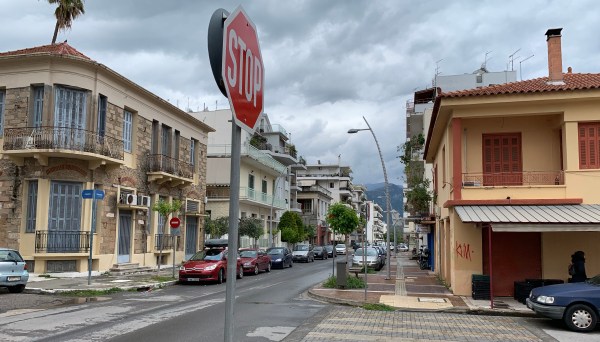
In the town where I lived the first years of my life, the world was no more that three blocks long and three blocks wide. You could see some of its boundaries from our house, which stood at a corner, a towering mountain at the end of one of the two streets, a tall hedge... Continue Reading →
Parliament Buildings: The architecture of power, accountability and democracy in Europe
From Churchill’s claim ‘we shape our buildings, thereafter they shape us’ to Mitterrand’s belief that ‘there is no great politics without great architecture’, parliamentary buildings are widely recognised as the symbols and instruments of political life. Parliament buildings are the symbols and instruments of political life. They shape political culture and the space where the... Continue Reading →
Book Launch – The Production Sites of Architecture
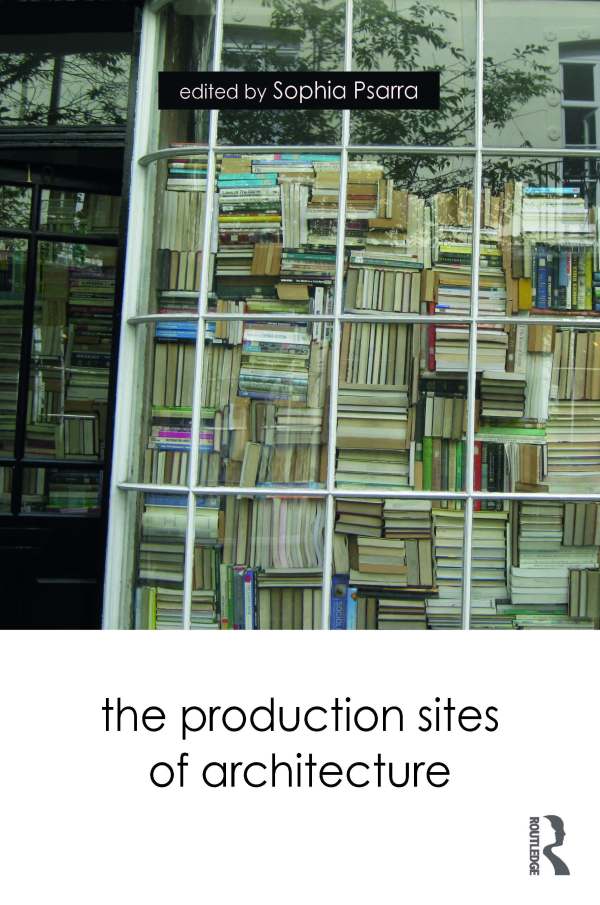
The title of The Production Sites of Architecture is a good summary of what the book is about. Inherent in the picture on the cover and the title is the question of architecture and frameworks of knowledge. Like all artefacts, buildings embody and produce knowledge. Their truly unique feature is their ability to transmit information,... Continue Reading →
Le Corbusier’s Venice Hospital: a genealogy of individual and collective intelligence in his architecture
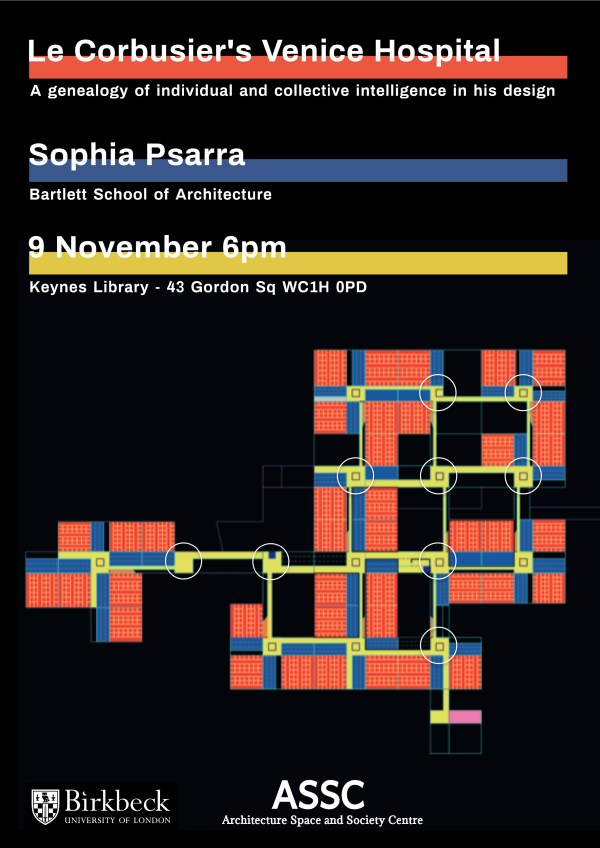
I will be speaking at the Architectural Space and Society Centre at Birkbeck 9 November 6pm Keynes Library, 43 Gordon Square, Birkbeck Le Corbusier's Venice Hospital: a genealogy of individual and collective intelligence in his architecture Sophia Psarra, Bartlett School of Architecture Leveraging new materials and means of production, architects, planners and corporate powers... Continue Reading →
The cognitive art of rendering displays of complex data – design strategies in the Piazza San Marco
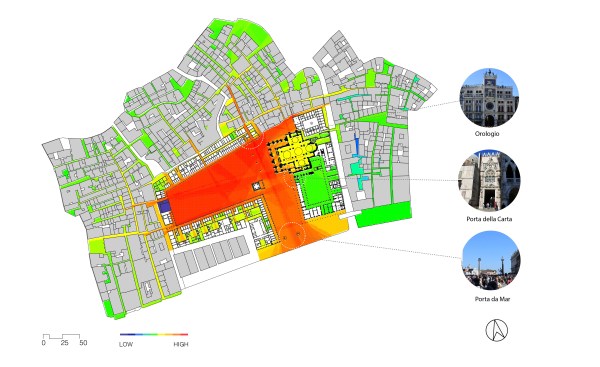
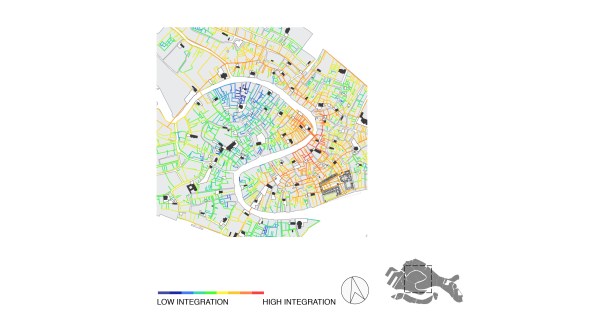
Visibility Graph Analysis of the Piazza San Marco in the context of neighbouring islands using Depthmap software1 Blog Entry I ‘...and the whole place in its huge elegance, the grace of its conception and the beauty of its detail, was more than ever like a great drawing room, the drawing-room of Europe profane... Continue Reading →
Mapping Real and Representational Space – Part I
‘However abstract, however contemplative in spirit, however remote from practical application, it [geometry] must surely have arisen from, and easily translates back into, the tasks of shaping artifacts, laying out buildings, and surveying land’. Robin Evans, The Projective Cast: Architecture and its Three Geometries. In a visually oriented culture we tend to equate... Continue Reading →
A Monumental Piece of Mythmaking: Jacopo de’ Barbari aerial view of Venice -Part III
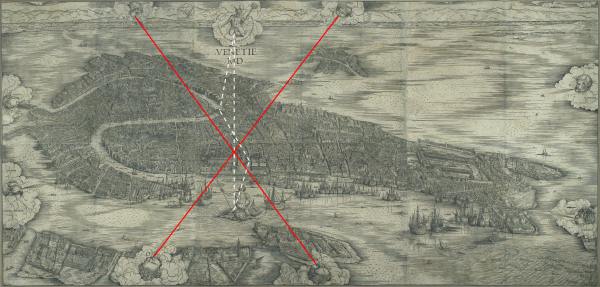
Looking closely at Jacopo de’ Barbari’s print, the earliest and largest naturalistic aerial view of the city that survives, we see that he used a geometric device, common to Mappae mundi. The vertical axis connecting the two mythological figures traverses the Orologio and runs between the two columns in the Piazzeta. While the columns guarded... Continue Reading →
A Monumental Piece of Mythmaking: Jacopo de’ Barbari aerial view of Venice -Part II
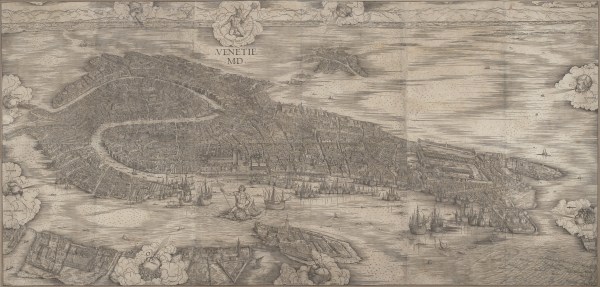
Consisting of six large sheets, the famous 1500’s woodcut (Venetie MD) by JACOPO de’ Barbari was a monumental feat of printmaking (135 by 282 cm).1 It took three years to complete, composing a southwest view of the city projecting viewers to a height of 500 metres, a position previously unimaginable. Yet, the naturalistic detail of... Continue Reading →
A Monumental Piece of Mythmaking: Jacopo de’ Barbari aerial view of Venice -Part I
In The Venice Variations (link to the pdf of the book) I discuss the properties of Venice’s urban form through which it came into being over a large period of time. These operations gave the city its physical form, social and economic life. Alongside these operations, a parallel project of mythmaking was taking place, by... Continue Reading →